The 30 Grocery Store Bargains Families Still Swear By

Grocery prices have climbed steadily over the past several years, and many households are still adjusting their shopping habits to keep costs manageable.
You can protect your budget by focusing on proven bargains rather than chasing every new deal that appears. Families across the country continue to rely on a set of tried-and-true purchases that consistently offer good value.
These bargains span multiple categories, from pantry basics to fresh produce, and they reflect strategies that have held up even as prices fluctuate. Understanding which items and stores deliver the most consistent savings can help you make more informed decisions at checkout.
1. Shop Aldi’s private-label staples
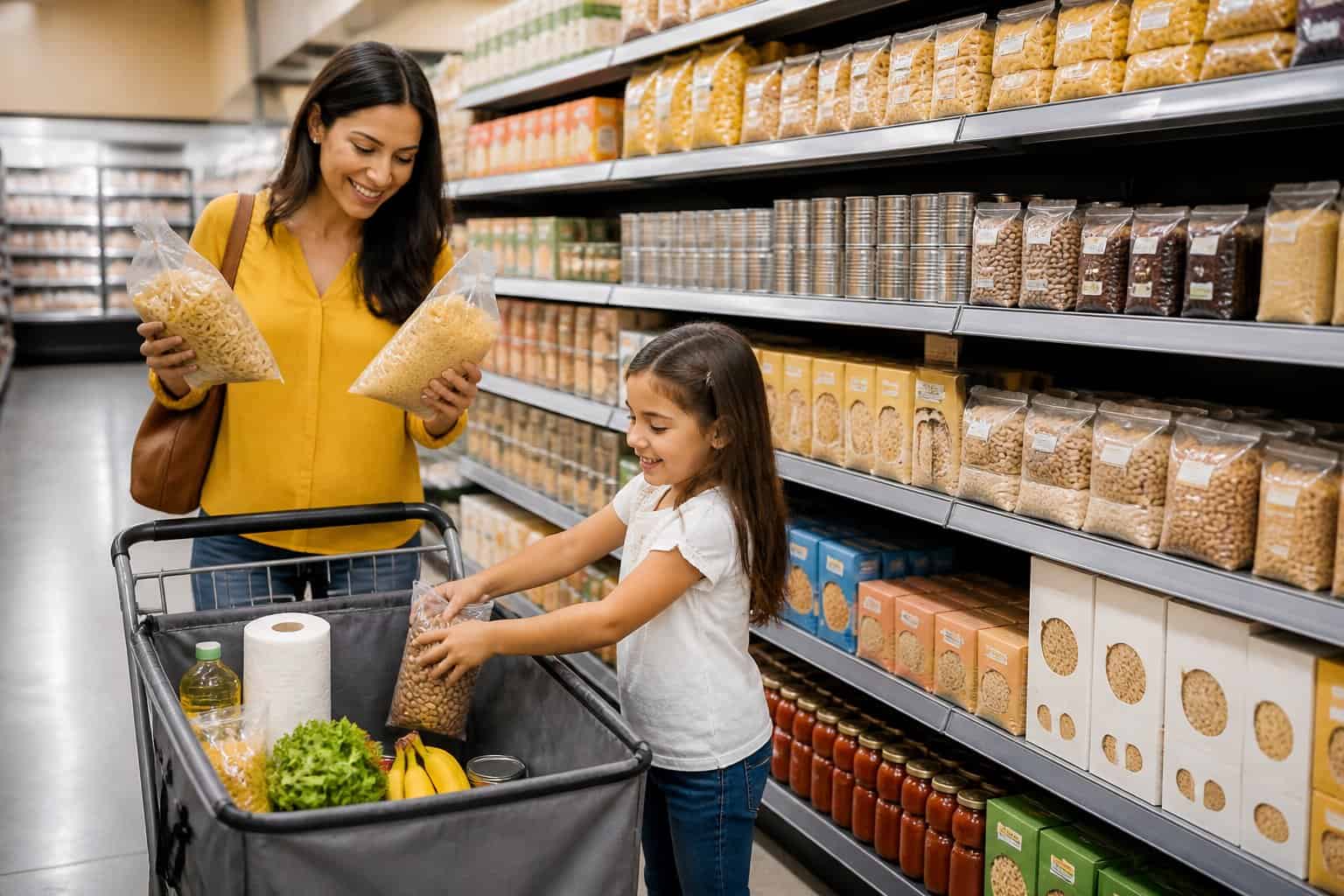
Most of what you find at Aldi carries the store’s own brand names, not the national brands you see elsewhere. Names like Simply Nature, Millville, Specially Selected, and Fit & Active replace familiar labels like General Mills or Prairie Farms.
This model keeps your grocery bill down. Aldi cuts costs by skipping licensing fees and marketing budgets tied to name brands, then passes those savings to you.
You’ll find this pricing across the store, from cereal and pantry basics to dairy and snacks. Many shoppers compare these private-label items directly to national brands and find little difference in taste or quality.
If you’re building a weekly shopping list, starting with Aldi’s house brands gives you a straightforward way to lower your total spend without changing what you buy.
2. Compare unit prices at Walmart
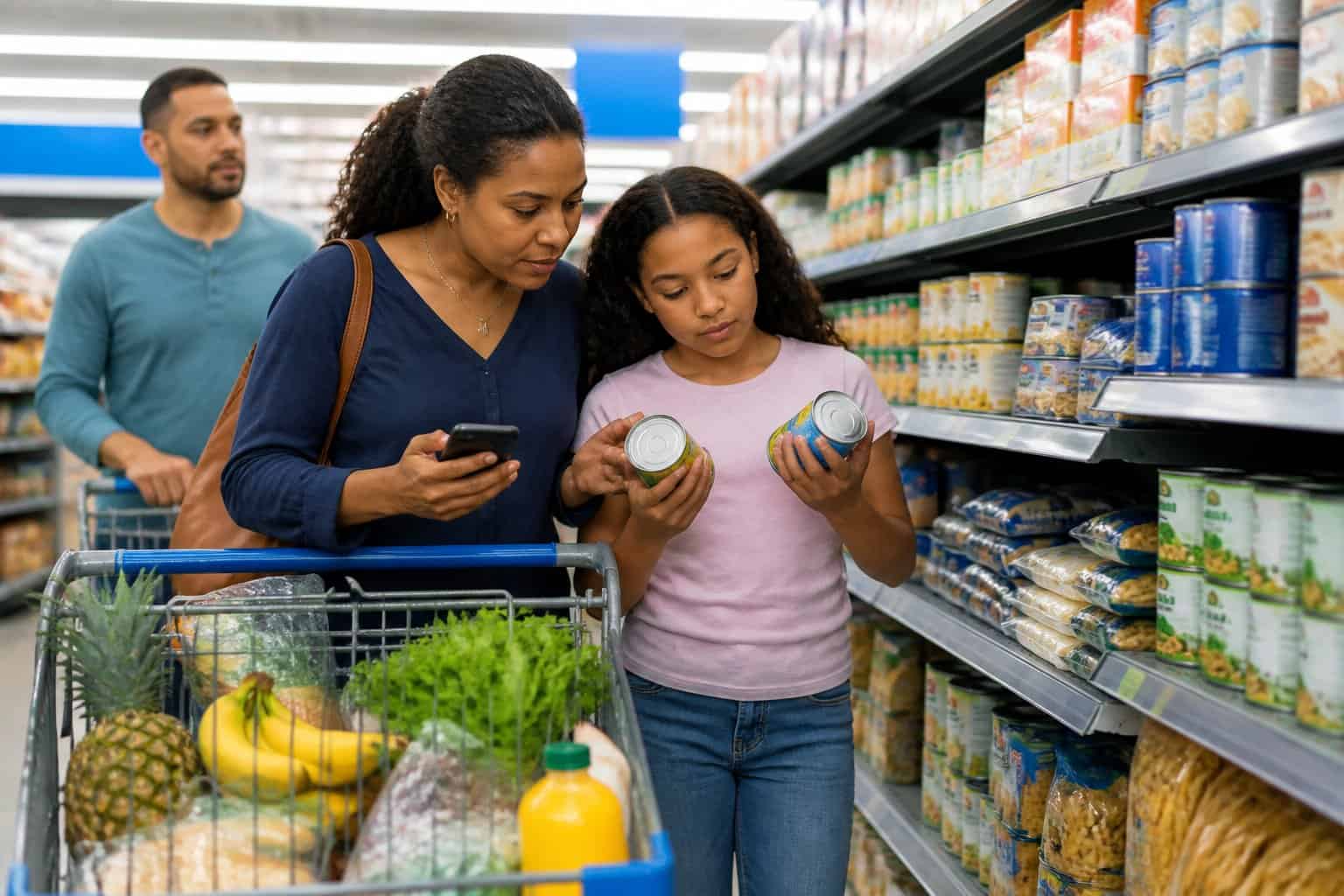
Walmart shelf tags list a unit price alongside the total price, usually per ounce, pound, or count. This number tells you the actual cost per unit, so you can compare a 12-ounce jar against a 32-ounce jar without doing math in your head.
Bigger packages aren’t always cheaper. Sometimes a mid-size container has a lower per-ounce cost than the largest option, especially during promotions on smaller sizes.
Check the unit price before checking the brand. Store brands and name brands sit on the same shelf, and the unit price makes it easy to see which one actually costs less per serving.
This works for nearly everything: cereal, coffee, cleaning supplies, snacks. Spend a few extra seconds reading the tag, and you’ll consistently pick the better value instead of guessing based on package size alone.
3. Buy seasonal produce on sale
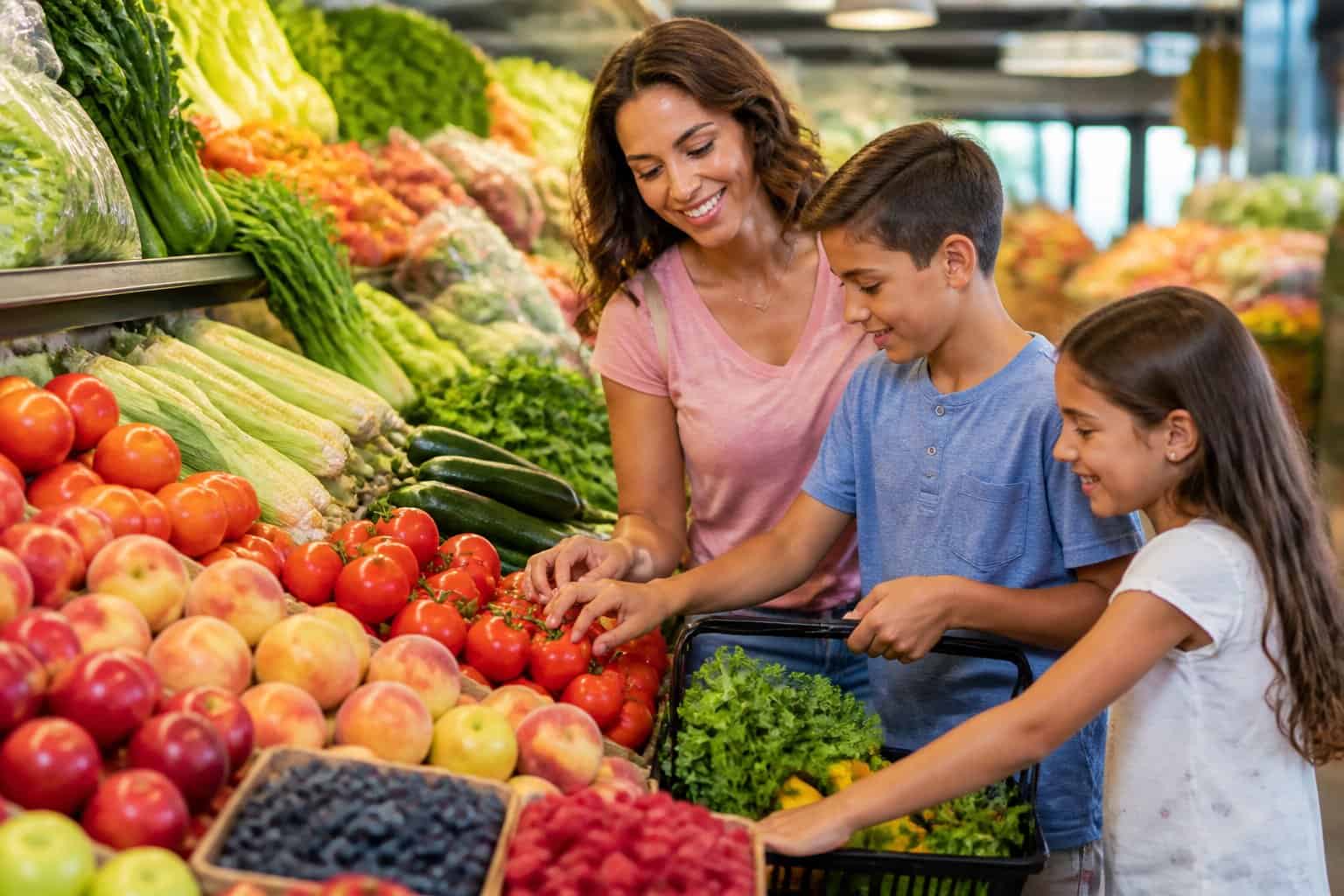
Produce prices swing based on what’s in season. When a fruit or vegetable is at peak harvest, supply goes up and prices come down. Buying outside that window means paying more for the same item.
You can plan meals around what’s cheapest right now instead of forcing recipes that call for out-of-season ingredients. This one shift keeps your grocery bill lower without cutting corners on freshness.
Weekly store circulars usually highlight seasonal produce sales, so check those before you shop. Apps that compare ads across multiple stores make this even easier, since you can see which chain has the best price without driving around.
Farmers markets and smaller independent grocers often carry seasonal items at lower prices than big chains too. Stock up when produce is at its cheapest, and freeze or preserve extra for later use.
4. Use weekly circulars before shopping

Weekly circulars list the sale prices at your local store before you walk in. Checking them first lets you build your shopping list around what’s actually discounted that week.
Most stores release new circulars on the same day each week, often Wednesday or Sunday. Apps like Flipp let you browse ads from multiple stores at once, so you can compare prices without visiting each one in person.
Some platforms also preview next week’s ads early. This gives you a chance to plan ahead if you know a specific item is about to go on sale.
Matching circular prices with manufacturer coupons can lower your total further. Many families use this combination to time larger purchases, stocking up on discounted staples instead of paying full price later.
Reviewing circulars only takes a few minutes but can shape your entire grocery list around real savings.
5. Match store sales with coupons

Sale prices alone don’t get you the lowest cost. You get real savings when you pair a weekly sale with a manufacturer coupon on the same item.
Start by checking your store’s weekly ad before you shop. Then look for matching coupons, either printable ones or digital coupons loaded to your store loyalty account.
Store apps make this easier now. Many chains show you which items on sale also qualify for extra digital coupons or loyalty rewards, so you don’t have to search separately.
Stack carefully. Most stores allow one manufacturer coupon per item, plus a store coupon or loyalty discount if available. Combining these with a sale price can cut your total significantly, especially on household staples you buy every week.
Keep a simple list of your regular purchases so you can spot when sales and coupons line up on products you already need.
6. Choose store-brand pantry basics
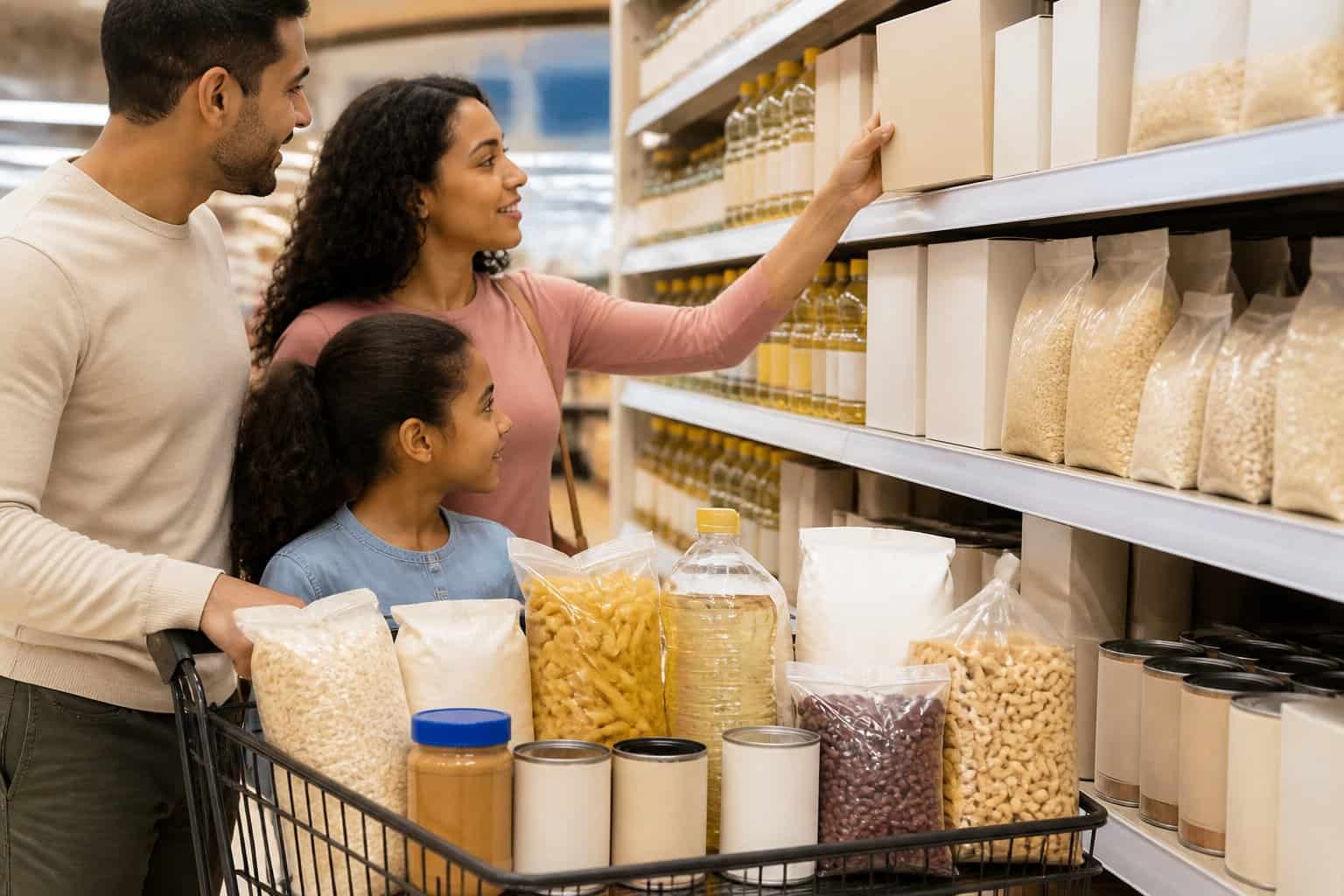
Flour, sugar, oats, and canned tomatoes usually cost less under a store brand than a national one. In many cases, the ingredients are nearly identical, since store brands often source from the same manufacturers as the brands you recognize.
Check the label before you decide. If the ingredient list matches a name brand, you’re likely paying extra for packaging and marketing rather than quality.
Rice, dried beans, and baking staples are especially safe bets for switching. These items have simple ingredient lists, so there’s little room for a noticeable difference in taste or performance.
You can expect to save 20 to 30 percent on these staples without changing what you cook or how it turns out. Over a year of regular shopping, that adds up.
Start with one or two items you buy often, then expand once you’re comfortable with the results.
7. Stock up during loss-leader promotions
Loss leaders are items grocery stores price below cost or margin to get you through the door. Common examples include rotisserie chickens, milk, eggs, and bread. Stores accept the loss on these products because they expect you to fill your cart with other, higher-margin items while you’re there.
You can use this to your advantage by checking the front page of your store’s weekly ad, where loss leaders are typically featured. When you spot one, buy enough to last until the next sale cycle, especially if the item is non-perishable or freezer-friendly.
Watch for loss leaders placed near complementary products. Stores often position pricier items next to a discounted staple to encourage add-on purchases. Stick to your list, grab the deal, and skip the upsell.
8. Plan meals around discounted proteins
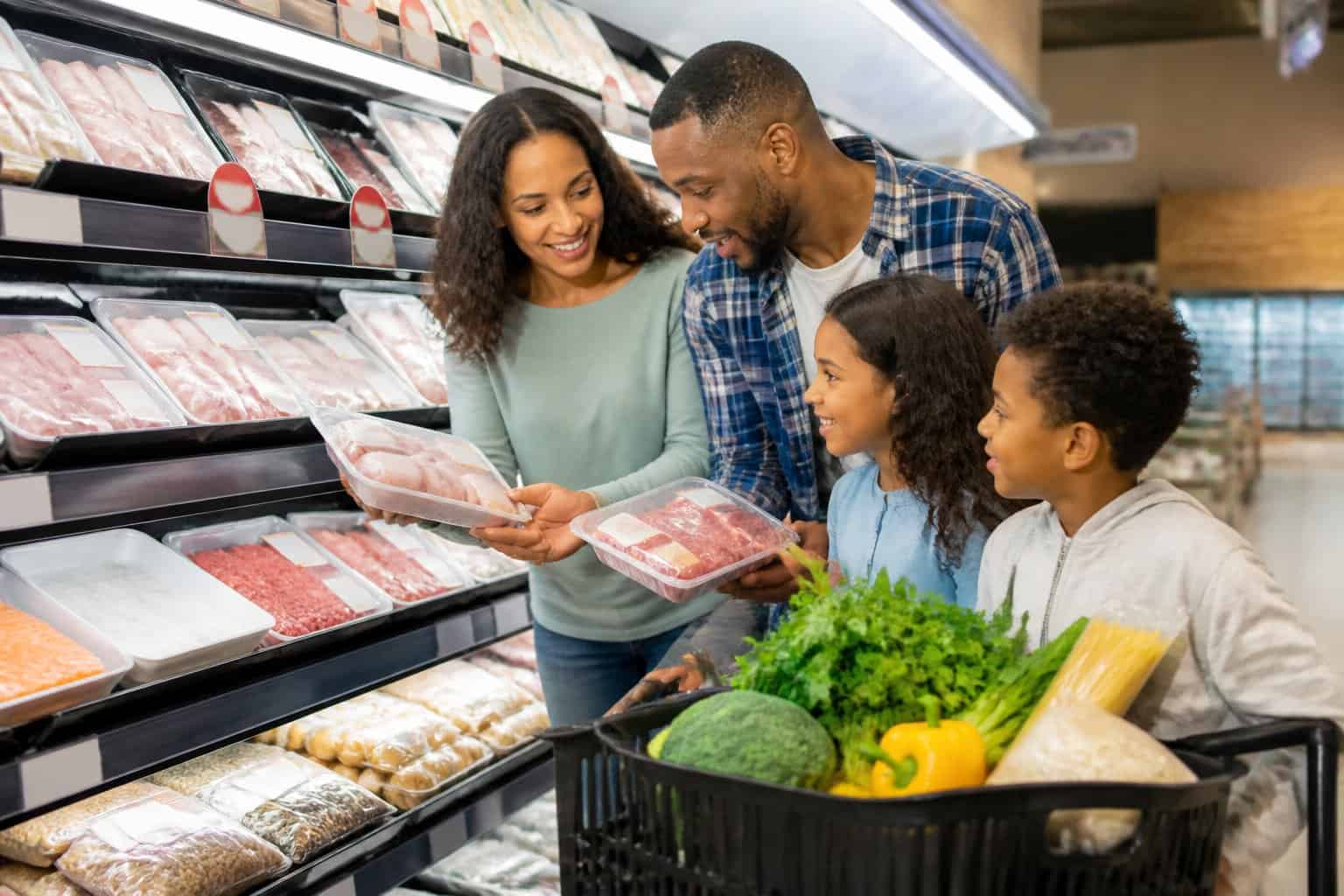
Protein is usually the most expensive part of your grocery bill, so it makes sense to let it drive your weekly menu. Check the sale flyer first, then build your dinners around whatever meat, fish, or eggs are marked down that week.
This approach works better than shopping with a fixed menu in mind. You end up paying less per meal, and you avoid the frustration of paying full price for something you could have swapped.
Pick one discounted protein and plan at least two meals around it. Chicken thighs on sale can become tacos one night and a stir-fry the next. Ground beef can turn into chili and then burgers.
You will also waste less food this way, since you’re buying what’s already moving through the store rather than letting it sit in your fridge. Over a month, this habit adds up to real savings without changing what you eat.
9. Buy dried beans instead of canned
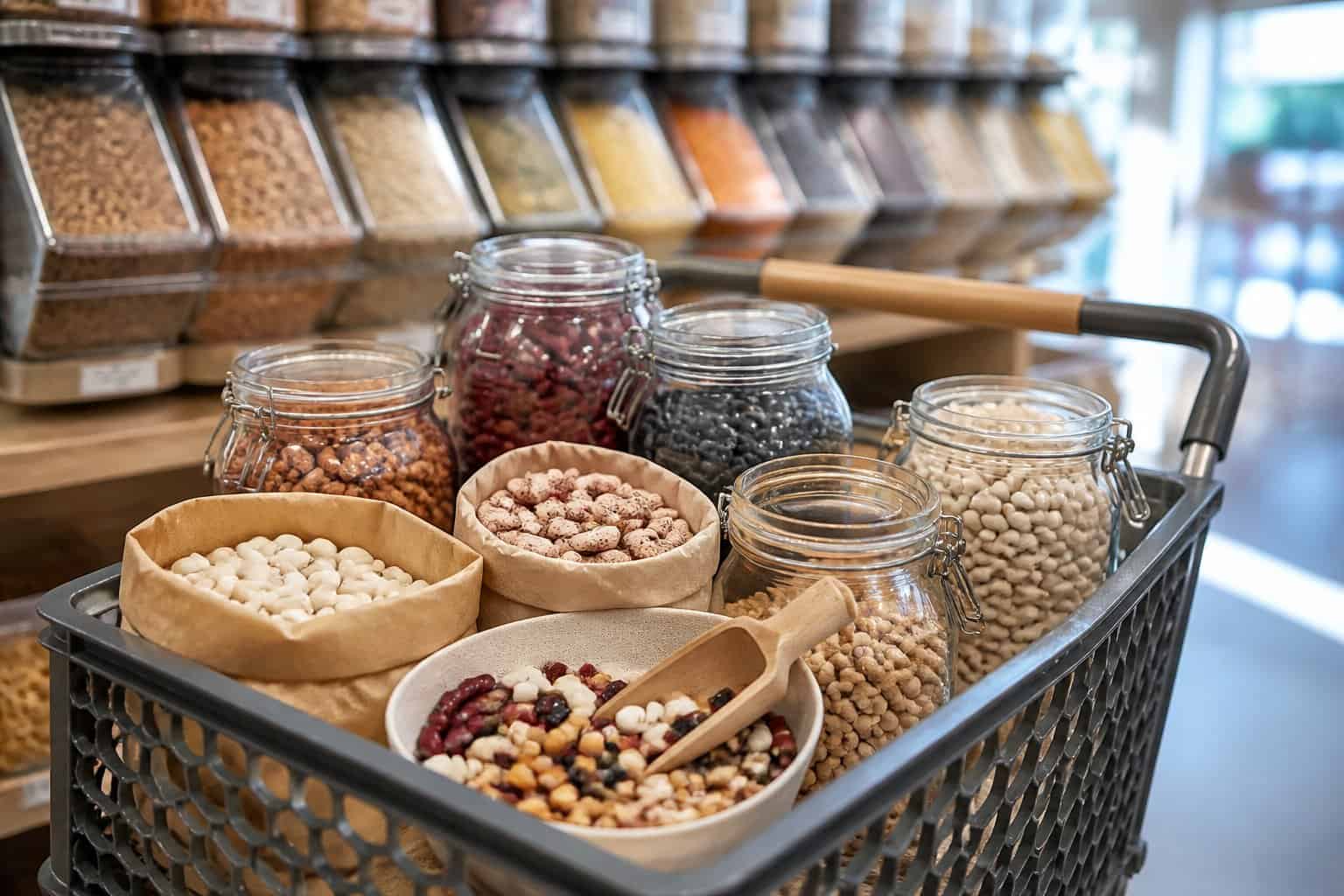
A pound of dried black beans costs around $1.50 and yields roughly six cups cooked. That matches four 15-ounce cans, which usually run $0.89 to $1.19 each.
Cooking your own beans cuts your bean spending by 60 to 70 percent compared to buying canned. You control the sodium and seasoning, and the texture holds up better in soups and stews.
Dried beans also last one to two years when stored in a cool, dry place. You can measure out exactly what a recipe calls for and keep the rest sealed away, so nothing goes to waste.
Canned beans still have their place when you’re short on time. But if you’re trying to lower your grocery bill without sacrificing quality, switching to dried beans is one of the easiest changes you can make.
10. Pick whole chickens over cut portions
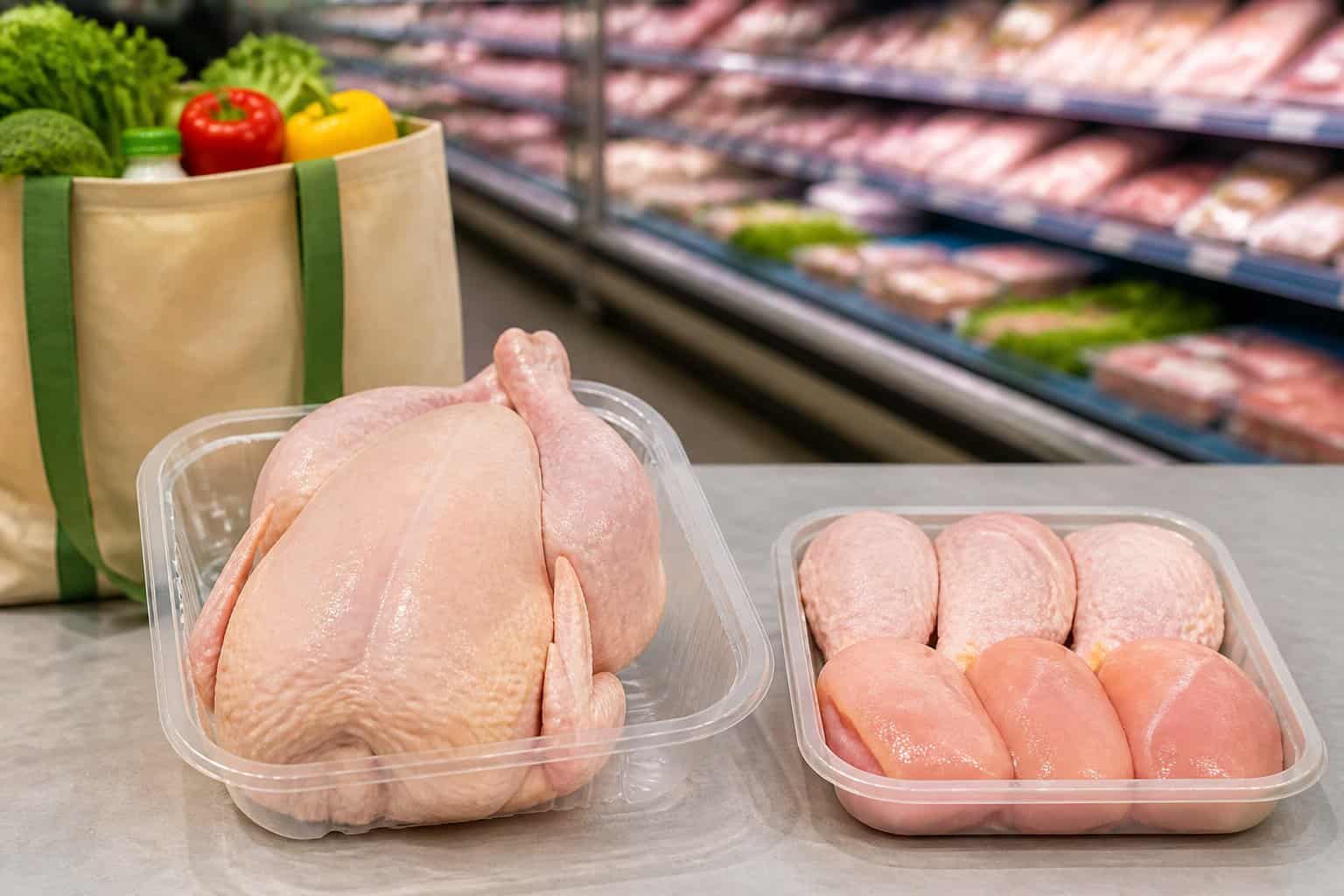
A whole chicken typically costs less per pound than buying breasts, thighs, or wings separately. One shopper found this out directly: three whole birds cost $18.78 but yielded over $31 worth of individual cuts, plus the carcass.
You get more for your money in two ways. First, you pay a lower base price for the same amount of meat. Second, you gain bones and skin that pre-cut packages don’t include.
Those leftover parts aren’t waste. Save the carcass and bones for homemade stock, which adds value without extra spending.
Breaking down a whole chicken takes about 10 minutes with a sharp knife. Once you learn the basic cuts, you can portion the meat however your recipes require.
This approach works especially well if you cook multiple meals from one bird, stretching your grocery budget further than pre-portioned parts allow.
11. Use loyalty rewards at Kroger

Kroger’s rewards program now gives you more control over how you save. Points you earn can go toward fuel discounts or grocery purchases, both in-store and online.
For every 100 points, you get $1 off your total, up to a daily cap of $10. This flexibility means you’re not locked into fuel savings if gas prices aren’t a priority for you that week.
You earn points through everyday purchases, digital coupons, and select promotions. Check your balance and redeem rewards by logging into your account on the Kroger app or website.
Signing up is free, and you don’t need a paid membership to access these savings. If you already shop at Kroger regularly, this program adds up over time without requiring extra effort on your part.
12. Check clearance sections for markdowns
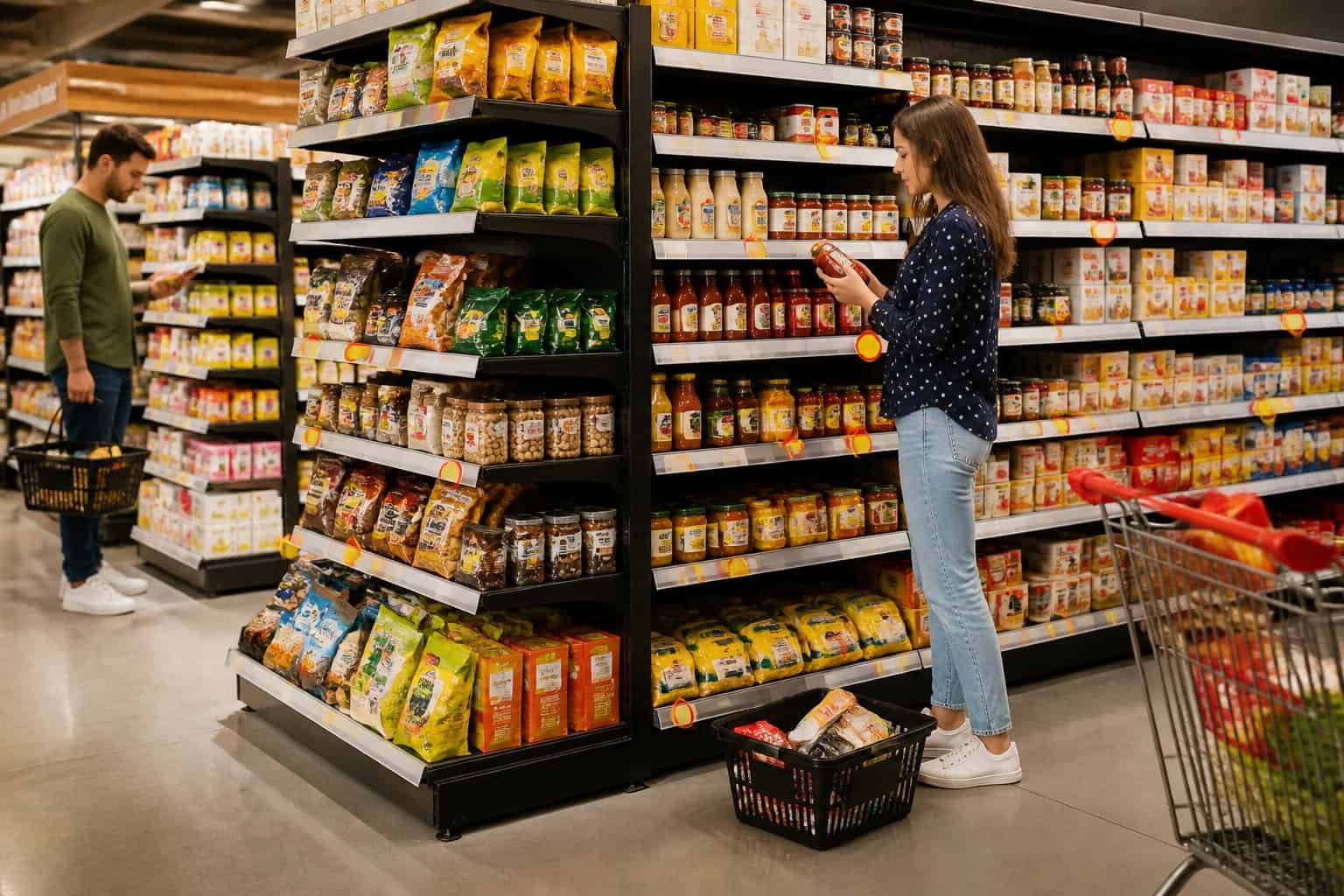
Most grocery stores mark down meat, bakery, and produce items within a day or two of their sell-by date. These discounts typically run 30 percent or more, and you’ll usually find them in dedicated clearance carts or on shelf tags with colored stickers.
Timing matters here. Early morning and late evening are when staff tend to update markdowns, so shopping during those windows gives you first access.
Clearance sections aren’t limited to fresh food. Check end caps near the back wall for discontinued or seasonal items, since stores often clear these out fast once a holiday passes.
Before buying, check the date and plan to use the item soon, or freeze it if possible. A markdown only saves you money if the food doesn’t end up wasted.
13. Shop frozen vegetables for value
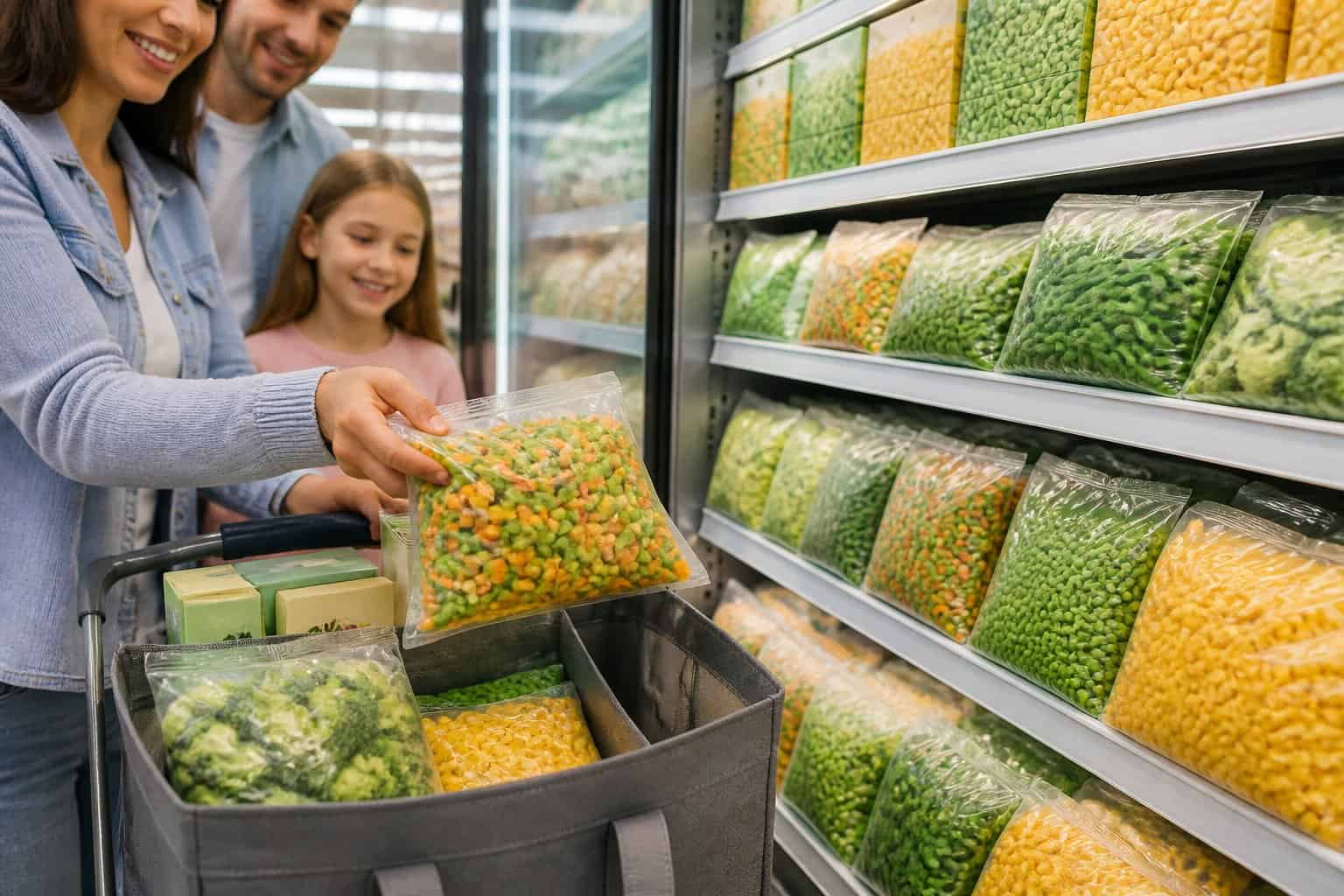
Frozen vegetables cost less per serving than fresh produce in most cases, and they last for months in your freezer. This means fewer trips to restock and less food waste from produce that spoils before you use it.
You get the same nutritional value from frozen vegetables as fresh ones. They’re typically frozen shortly after harvest, which locks in vitamins and minerals.
Buy plain frozen vegetables instead of those with sauces or seasoning packets. Plain varieties cost less and give you control over sodium and flavoring.
Store brands work well here. Compare unit prices between name brands and store brands to find the better deal.
Stock up when frozen vegetables go on sale, since they won’t expire before you use them. Keep a mix of vegetables on hand for soups, stir-fries, and side dishes without last-minute grocery runs.
14. Buy oats in bulk
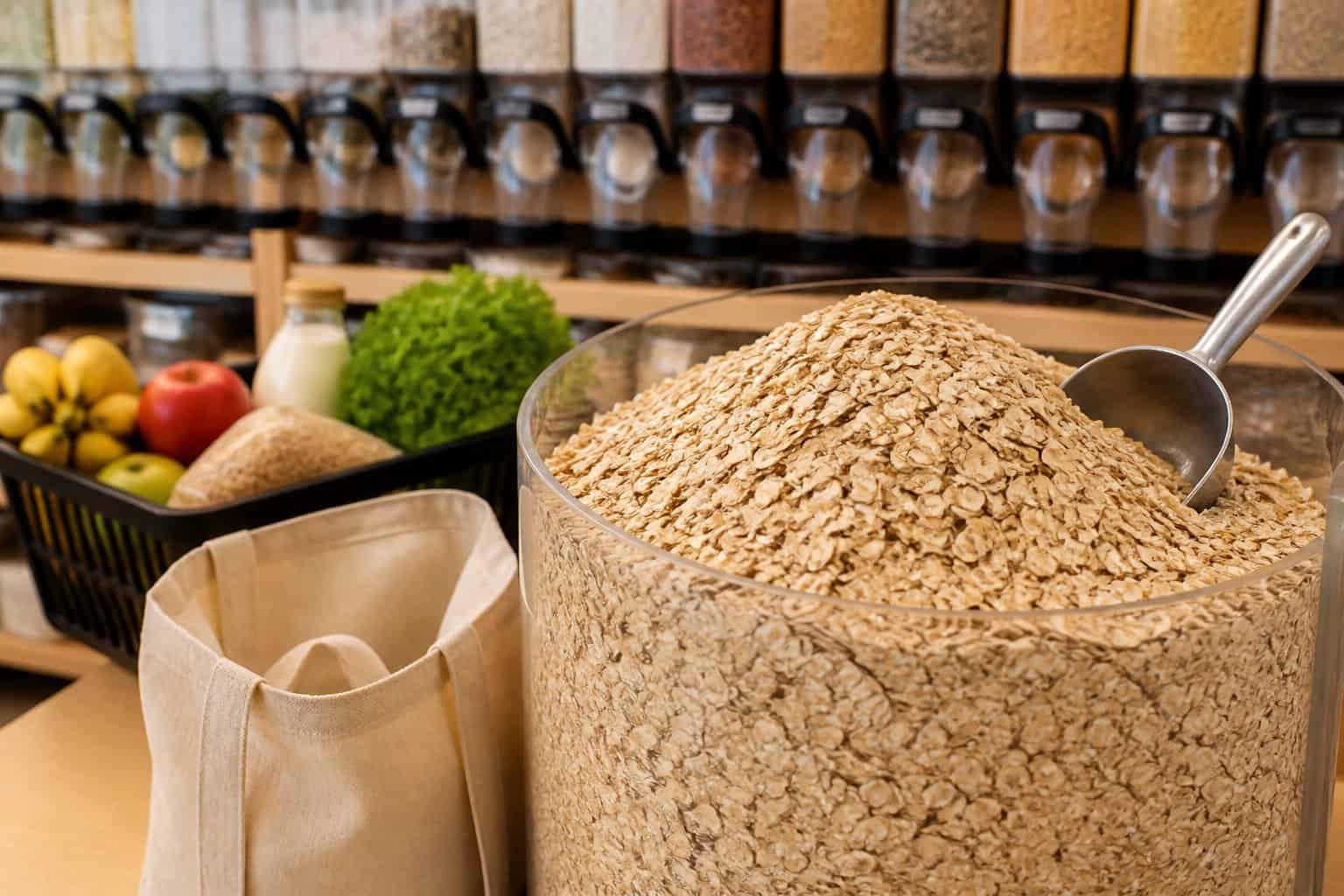
Oats last a long time on the shelf, so buying them in bulk makes sense for most families. A 25 or 50-pound bag costs far less per serving than small canisters at the grocery store.
You can find rolled oats, steel-cut oats, and quick oats in bulk sizes online or at warehouse stores. Rolled oats work well for oatmeal and baking, while steel-cut oats give you a heartier texture if you prefer that.
Store your bulk oats in an airtight container to keep them fresh and to keep pests out. A cool, dry pantry spot works best.
Oats are versatile beyond breakfast. You can use them in cookies, granola bars, meatloaf, and as a thickener for soups.
Buying in bulk also means fewer shopping trips for this staple, since you won’t run out as quickly.
15. Compare Costco bulk prices carefully

Costco often looks cheaper simply because packaging is larger. Before you buy, break the total price down to a per-unit cost and compare it against your regular grocery store.
Some studies have found Costco beats standard supermarkets on many staples, including paper goods, oil, nuts, and canned items. Savings can be significant on these categories.
But bulk isn’t automatically better for every household. If you can’t use a product before it spoils, you lose money regardless of the per-unit price.
Factor in your membership fee too. It only pays off if your savings over the year exceed what you spent to shop there.
Check prices seasonally, since Costco’s bulk deals shift throughout the year. Comparing your typical shopping list against both stores gives you a clearer answer than assuming warehouse pricing always wins.
16. Use Family Dollar digital coupons
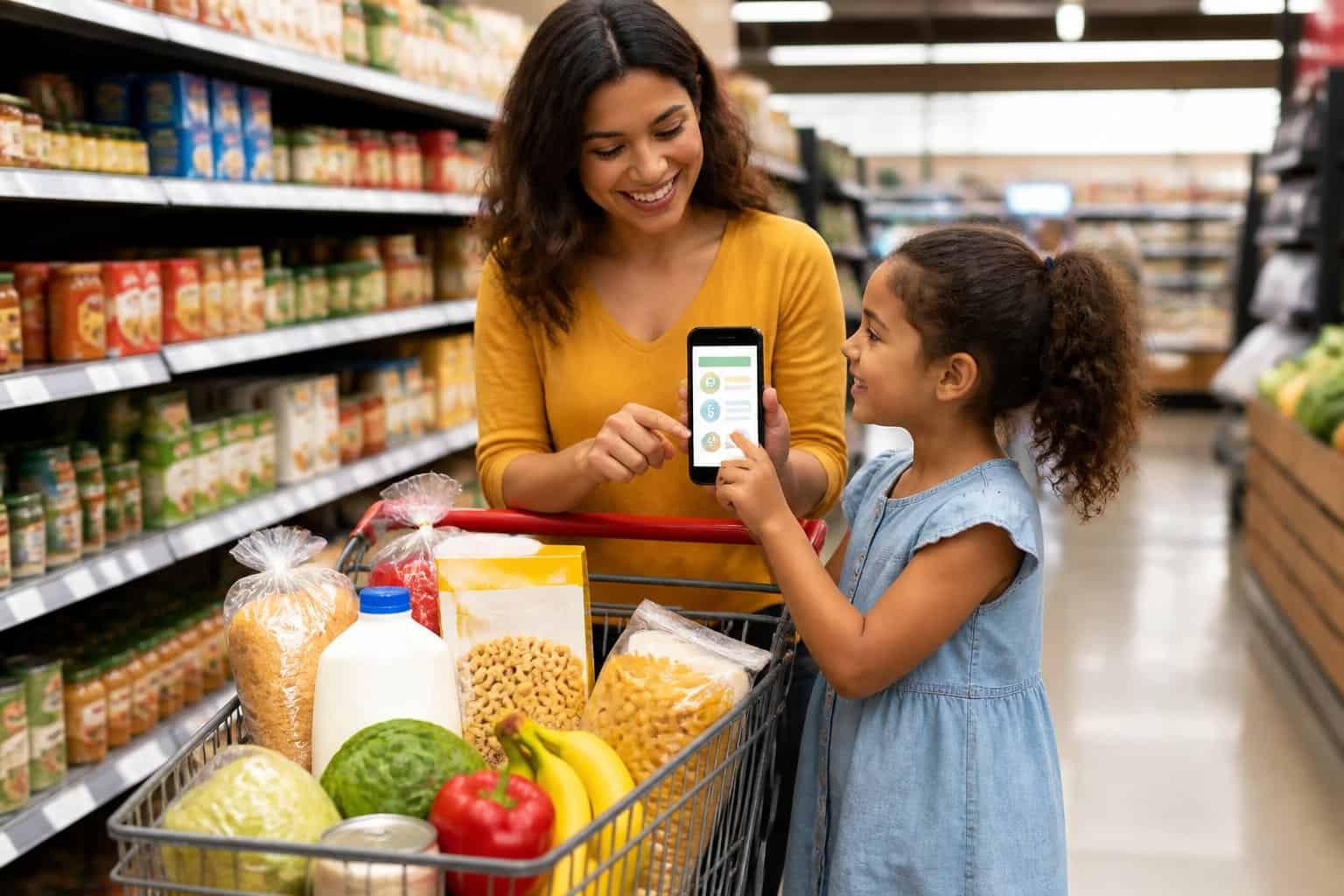
Family Dollar’s Smart Coupons app lets you clip digital coupons directly to your account and redeem them at checkout. No paper cutting required.
You can browse weekly ads, scan products in-store to find matching deals, and stack digital coupons with manufacturer paper coupons on the same item. This combination often produces better savings than using either type alone.
Watch for the recurring $5 off $25 threshold coupon, which applies broadly across a purchase once you hit that spending minimum. Combined with sale prices, this can meaningfully lower your total.
Check the app before each shopping trip, since offers rotate weekly and some are personalized to your account. Clipped coupons stay saved until they expire, so there’s no rush to use them immediately.
Setting a habit of reviewing new coupons once a week keeps you from missing savings on items you already buy regularly.
17. Purchase day-old bakery items

Fresh bread and pastries usually sell at full price for one day before stores mark them down. Bakery items go stale quickly, so grocery stores need to clear that inventory fast rather than let it sit.
You will typically find these discounts in the late afternoon or evening, often 30 to 50 percent off. Look for bright discount stickers on bagged bread, bagels, and pastries near the bakery section.
Buying day-old items works well if you plan to freeze them or use them soon. Bread revives easily with a quick reheat in the oven, and it works fine for toast, sandwiches, or croutons regardless of age.
Check the marked-down bakery section every time you shop. It is one of the simplest ways to cut your grocery bill without changing what you actually buy.
18. Choose large tubs over single servings
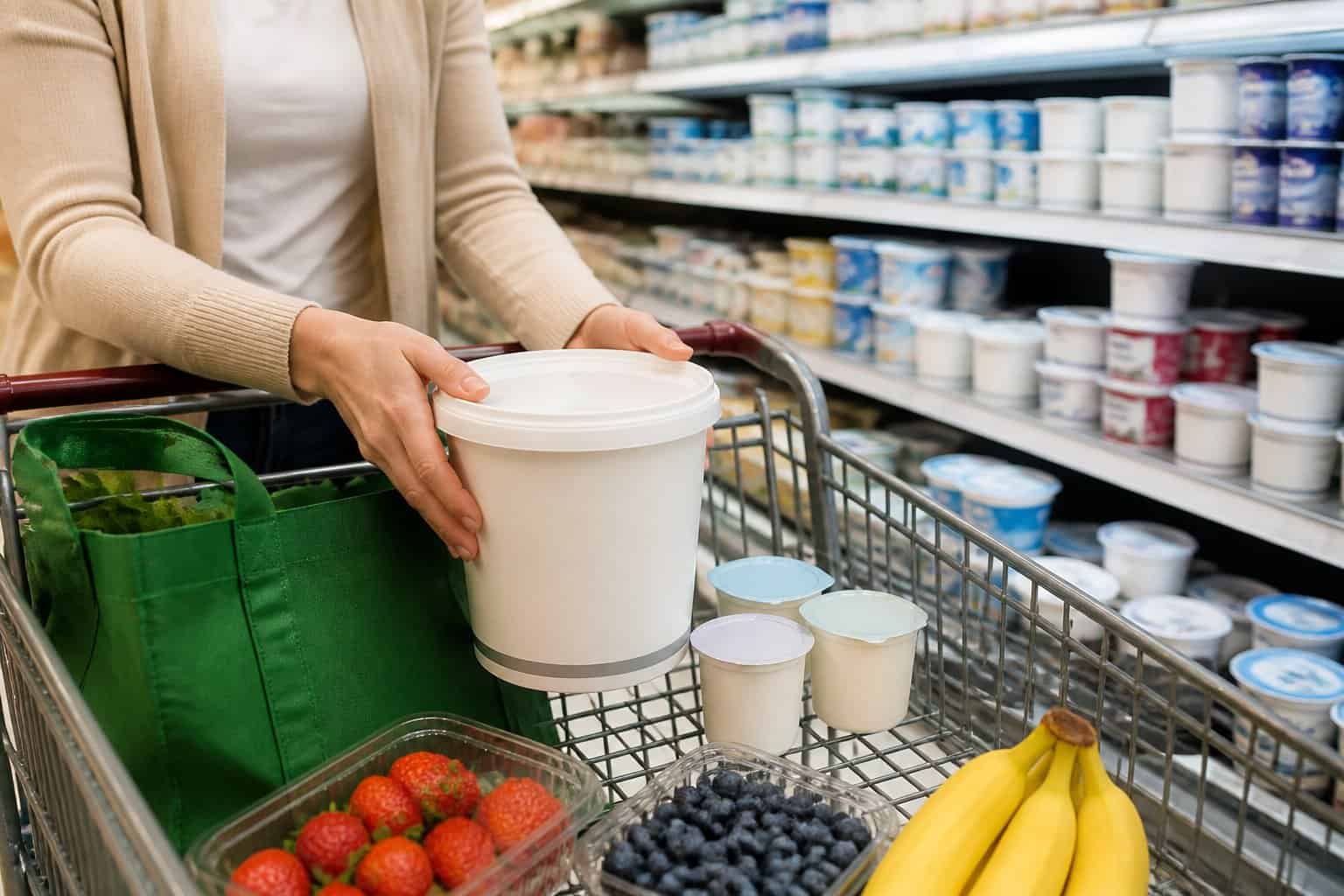
Yogurt, ice cream, and similar snacks cost less per ounce when you buy the large tub instead of individual cups. A 32-ounce tub of yogurt typically works out cheaper per serving than the same amount split into 5.3-ounce single-serve containers.
You can portion the large tub yourself using reusable containers, which gets you the same convenience without the markup. This also cuts down on plastic packaging waste.
Check the unit price before assuming the bigger size is the better deal. Some products carry a smaller unit price in bulk, while others offer only a marginal difference, so it pays to compare labels rather than assume.
If you go this route, keep an eye on nutrition labels too, since bulk versions sometimes differ slightly from single-serve formulas.
19. Freeze discounted meat promptly
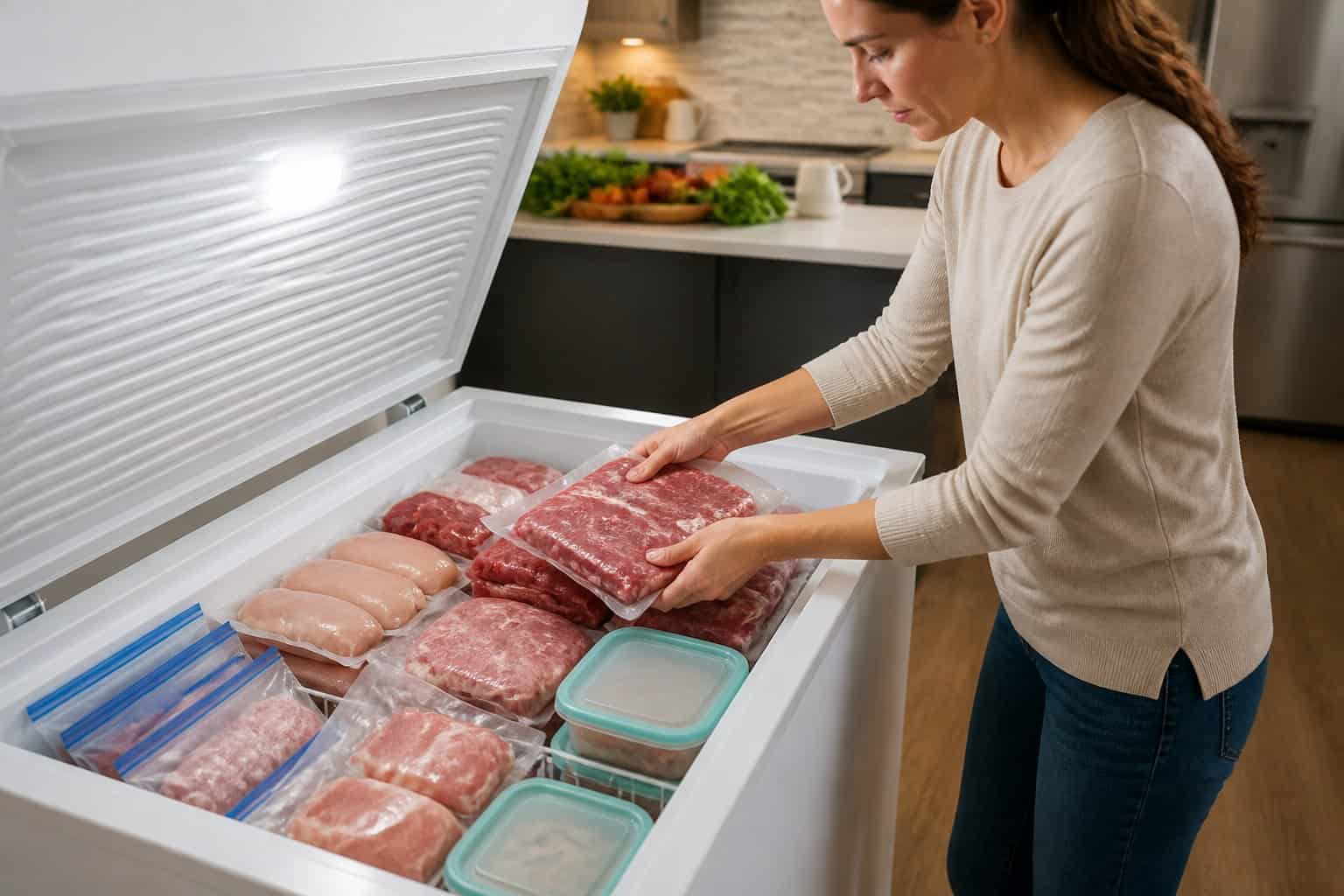
Grocery stores mark down meat as it nears its sell-by date, not because it’s already spoiled. That date signals when quality starts to decline, not when the product becomes unsafe. If you plan to use it right away, refrigerate it and cook it within a day or two.
If you’re not cooking it soon, freeze it as soon as you get home. Meat that’s been discounted has less of a safety margin than fresh-dated cuts, so waiting even a day can push it past the point of no return.
Divide larger packages into portions before freezing. This lets you thaw only what you need later and keeps quality consistent across the batch.
Label each package with the date you froze it. Most cuts hold their quality for several months, but tracking dates helps you use older items first.
20. Shop farmers’ market closing-time deals

Vendors don’t want to pack up unsold produce, so they cut prices in the final 30 to 60 minutes before the market closes. Discounts often range from 20% to 50%, and on the last day of the season you may see markdowns as steep as 70%.
The trade-off is selection. You’ll find whatever is left, not necessarily what’s on your list.
To make this work, stay flexible about what you buy. Bring cash, since some vendors prefer it for quick, discounted sales.
Talk to sellers directly. Many will negotiate on bulk purchases, especially if it means less to haul home.
This approach suits shoppers who cook based on what’s available rather than a fixed menu. It won’t replace your main grocery trip, but it stretches your budget on fresh, seasonal food.
21. Buy pasta during multi-buy sales
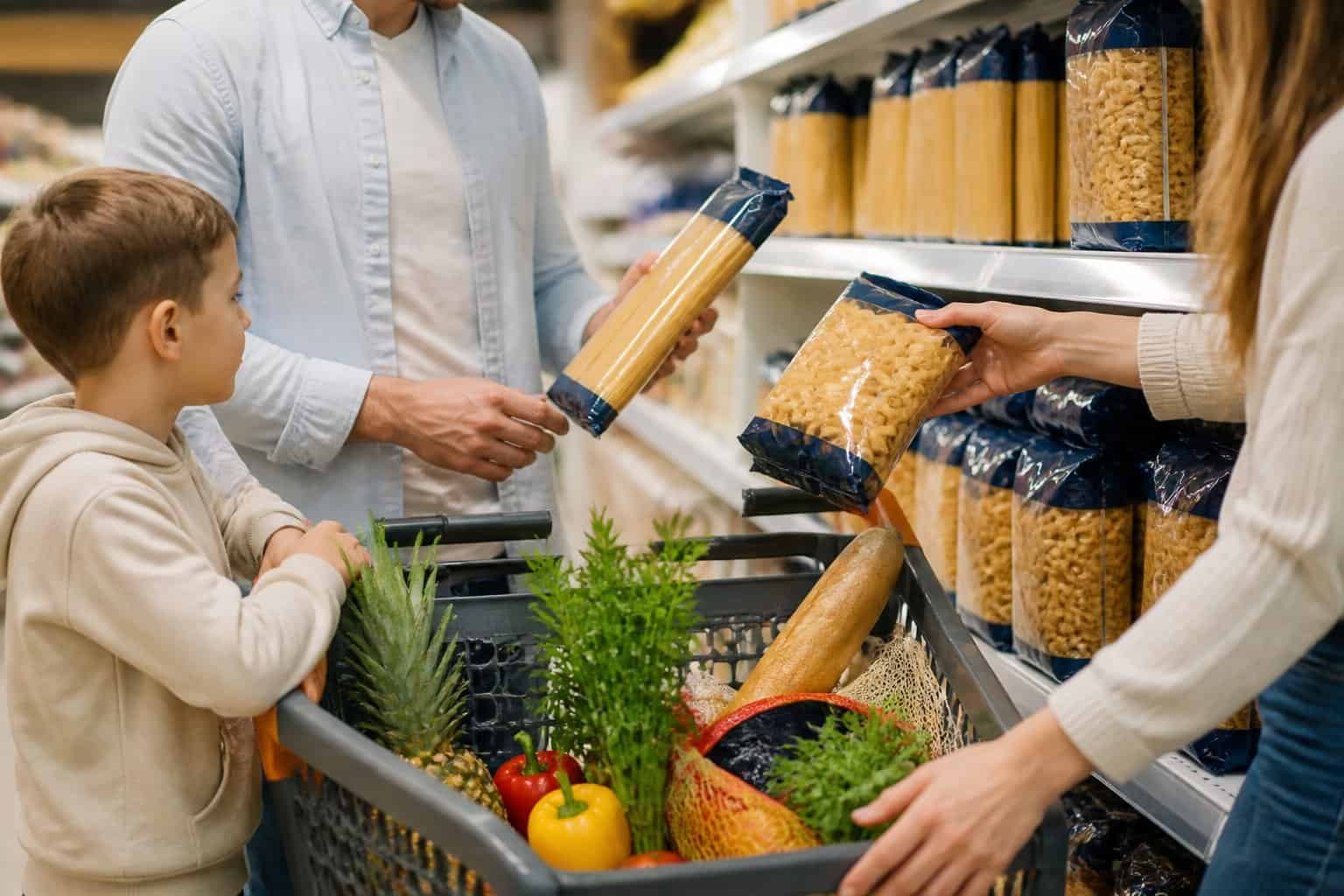
Pasta is a staple that lasts for months in the pantry, so stocking up during sales costs you nothing in the long run. Boxes often drop to around $1 each during peak promotional weeks, especially when stores run “buy more, save more” deals.
Watch for stacking opportunities. Combining a store’s digital coupon with a manufacturer discount and your loyalty card can push the price down further than any single offer.
Check weekly ads before you shop. Chains like ShopRite, Kroger, and Safeway rotate pasta discounts regularly, and prices can vary significantly between them in the same week.
Since dry pasta doesn’t spoil quickly, you can buy enough during a sale to last several months. This turns a routine purchase into a real budget saver, especially for larger households that go through multiple boxes each week.
22. Use cashback grocery apps

Cashback apps let you earn money back on groceries you already buy. Apps like Ibotta and Fetch Rewards work by scanning your receipt after checkout, crediting your account for eligible items or a percentage of your total.
You don’t need to change where you shop. Most apps work with receipts from nearly any grocery store, so you can keep your regular routine and still collect rewards.
Using more than one app on the same trip can increase your payout. Many families scan a single receipt through two or three apps to capture every rebate available.
Payouts vary by app and typically require you to reach a minimum balance before cashing out. Check each app’s terms so you know how and when you’ll actually receive your money.
Keep your phone handy at checkout, since some offers need to be selected before you pay.
23. Compare Aldi and Walmart prices
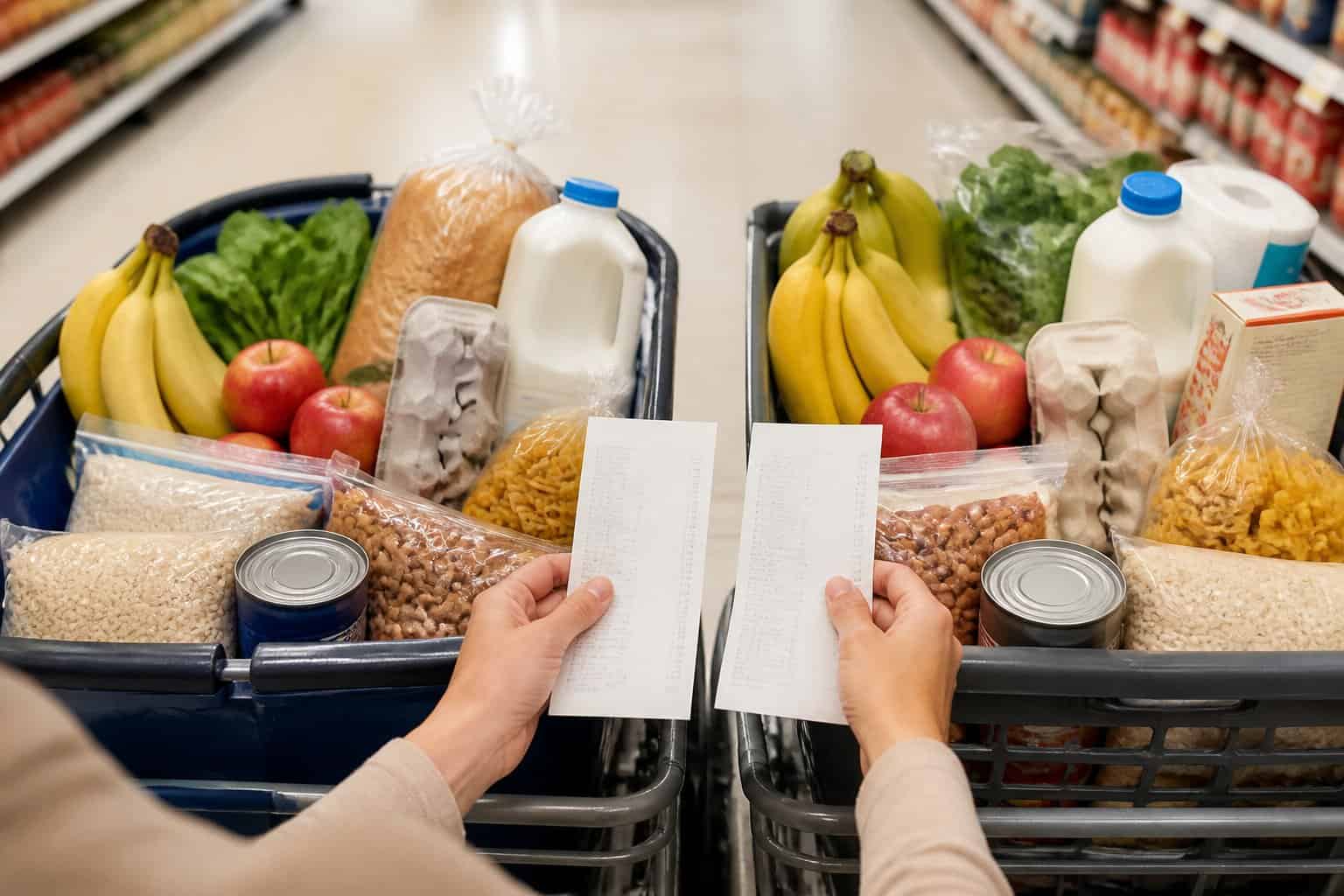
Aldi and Walmart both market themselves as low-price leaders, but the actual winner depends on what’s in your cart.
On staples like milk, bread, canned goods, and dairy, Aldi’s private-label products often run 10 to 15 percent cheaper than Walmart’s equivalents. You’ll notice this most on items you buy every week.
Walmart tends to pull ahead on eggs, bacon, bulk-size packages, and name-brand items Aldi doesn’t stock at all. If your list includes specific brands or larger quantities, check Walmart first.
Since Aldi carries a smaller selection, you may need a second stop for items like specialty products or household goods. Many families split their shopping: Aldi for weekly basics, Walmart for everything else.
Prices shift by region and season, so a quick comparison at your local stores before you commit to one chain gives you the clearest picture.
24. Choose in-season apples and bananas
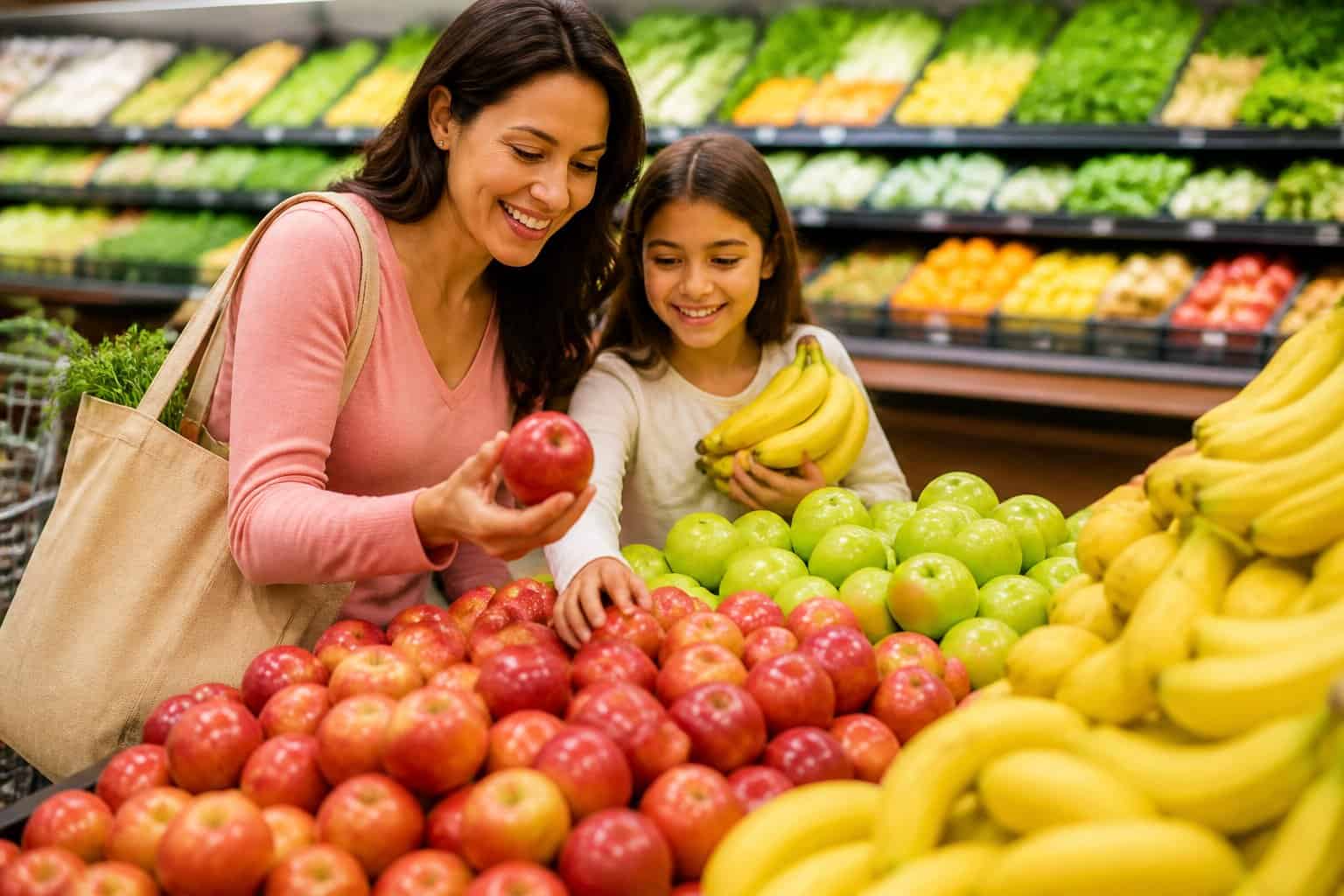
Apples and bananas stay on nearly every shopping list because they are consistent, affordable, and easy to work with. Bananas are grown and shipped year-round, so their price rarely spikes the way seasonal fruit does.
Apples work a bit differently. Common varieties like Gala, Fuji, and Red Delicious are harvested in fall but stored and sold through most of the year, keeping prices steady. If you want the best price, stick to these mainstream varieties instead of specialty types like Honeycrisp, which often cost more.
Both fruits travel well, need no special prep, and fit into lunches, snacks, or breakfast without extra effort. Buying them regularly, rather than searching for rotating seasonal deals, gives you a dependable way to keep produce costs predictable from week to week.
25. Buy store-brand dairy products

Milk, cheese, butter, and yogurt often come from the same regional suppliers, regardless of the label on the package. Store brands typically cost less because they skip heavy marketing and packaging expenses.
You can save a meaningful amount by switching your everyday dairy purchases to store brands. Milk especially shows little difference in taste or quality between name brands and store labels, since both usually meet the same pasteurization and safety standards.
Cheese is another area where store brands hold up well. Shredded cheddar, mozzarella, and cream cheese from store labels often taste nearly identical to national brands at a lower price point.
If you buy dairy weekly, these small savings add up over months. Check unit prices when comparing, since package sizes can vary between brands.
For organic or specialty dairy needs, some store brands now offer their own organic lines, giving you savings without giving up those specific requirements.
26. Check unit prices on cereal
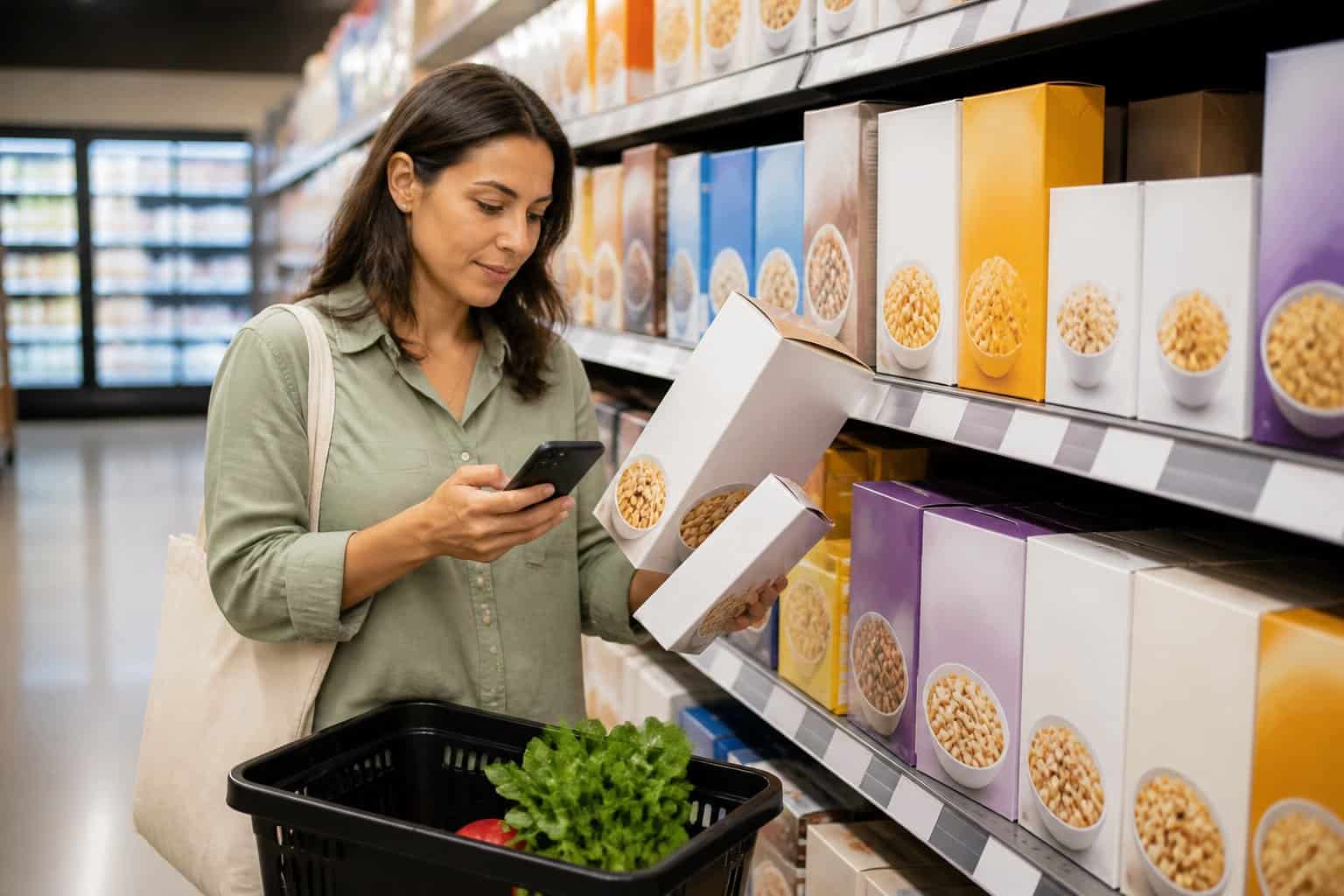
Cereal boxes come in so many sizes that price-per-ounce comparisons matter more than the sticker price. A family-size box often wins on unit price, but a smaller store-brand box can still cost less at checkout if you only need a small amount.
Look at the unit price label on the shelf tag instead of guessing. Most stores list the price per ounce or per pound directly below the shelf price, so you don’t need to do the math yourself.
Compare name brands against store brands using this same number. The ingredients are often nearly identical, but the unit price gap can be significant.
Check unit prices again when a sale sign goes up. A “sale” price isn’t always the better deal once you calculate the actual cost per ounce against a regular-priced competitor.
27. Shop pantry sales before holidays
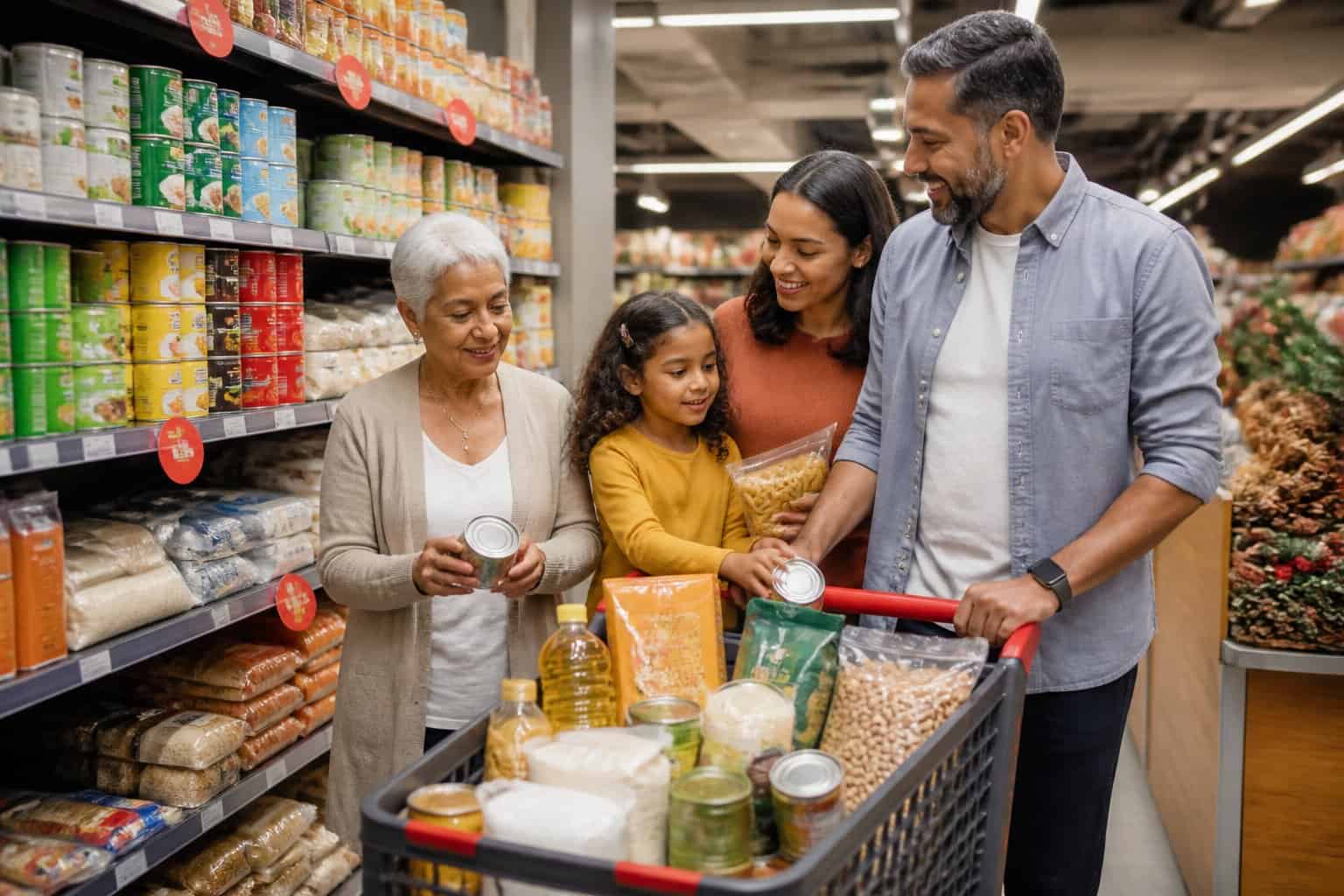
Grocery stores discount pantry staples heavily in the weeks before major holidays. You’ll find canned vegetables, broths, baking supplies, and boxed sides marked down as stores compete for holiday shoppers.
These sales typically start two to three weeks before the holiday itself. Watch for Thanksgiving and Christmas promotions especially, since they tend to cover the widest range of pantry goods.
Stock up on items with long shelf lives when you see these discounts. Canned goods, pasta, rice, and baking ingredients last for months, so buying extra now saves you from paying full price later.
Compare prices against your store’s regular sales cycle first. Some holiday “deals” simply match routine discounts you’d see anyway, so check unit prices before assuming you’re getting a special bargain.
Your weekly ad and store app will show you when these promotions begin each season.
28. Use rain checks when available

A rain check is a written slip from the store that lets you buy a sold-out sale item at the original discounted price later. When you see an empty shelf where a sale item should be, ask the customer service desk for one before you leave.
Many major supermarkets, including Publix and Kroger, will issue these on request, though policies vary by chain and even by location. Some stores limit rain checks to certain items or set expiration dates, so ask about the terms when you request one.
Once you have a rain check, treat it like a normal sale price at checkout. You can often still apply coupons on top of it, which stretches your savings even further on restocked items.
29. Purchase generic spices and seasonings
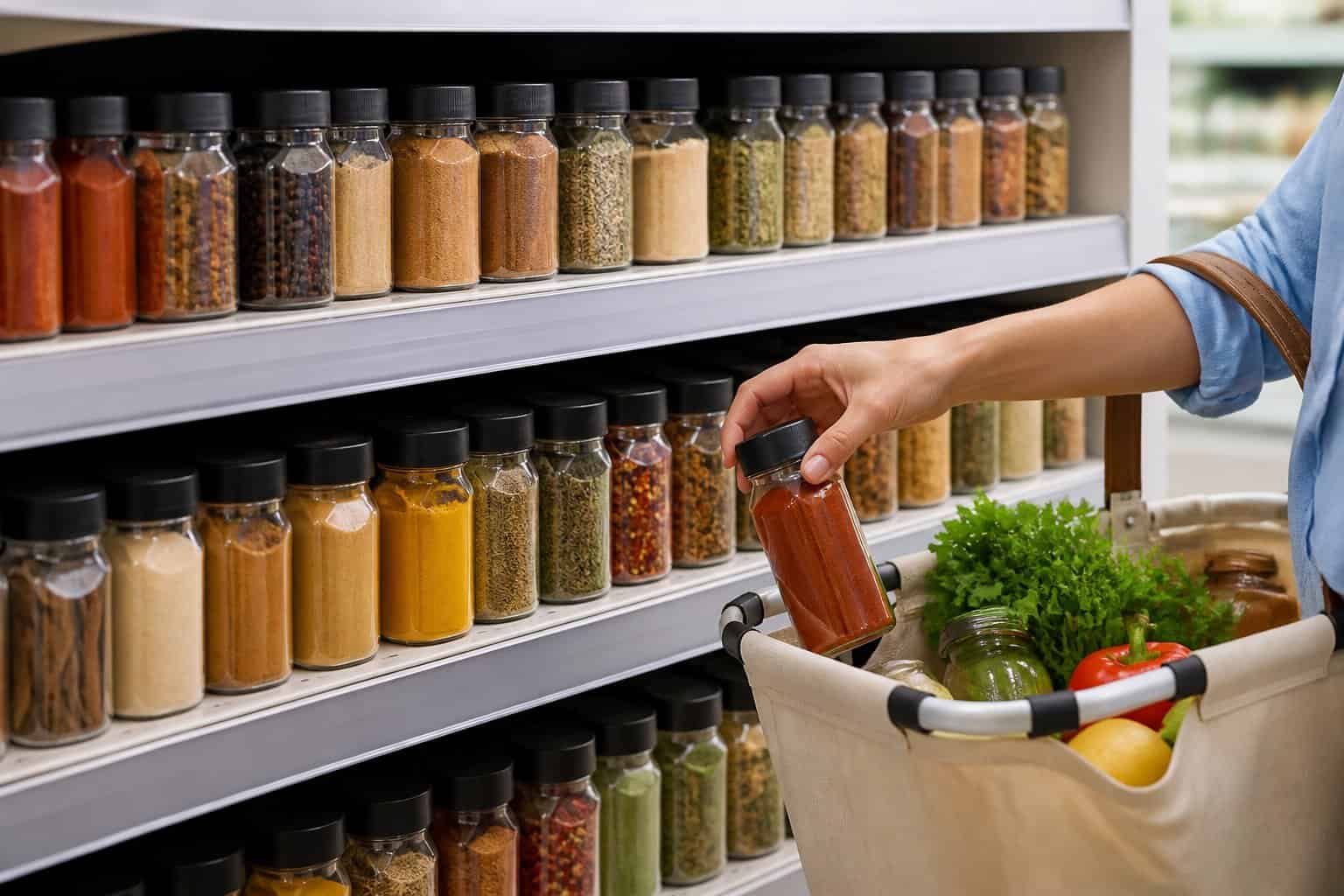
Name-brand spices often cost significantly more than store-brand versions, even though the ingredients are nearly identical. You’re paying for packaging and marketing, not better flavor.
Retailers like Walmart, Target, and Aldi sell their own spice lines at a fraction of the price of premium brands. Great Value and similar store brands cover the basics you use most: garlic powder, paprika, cumin, and dried herbs.
Warehouse clubs like Costco offer another option if you go through spices quickly and want bulk quantities at lower per-ounce costs. For less common seasonings, specialty bulk retailers let you buy exact amounts instead of committing to a full jar.
Before switching, check the ingredient list to confirm you’re getting pure spice without added fillers. Once you compare a generic version side-by-side with a pricier brand, you’ll likely notice little difference in your cooking results.
30. Buy rice in larger bags
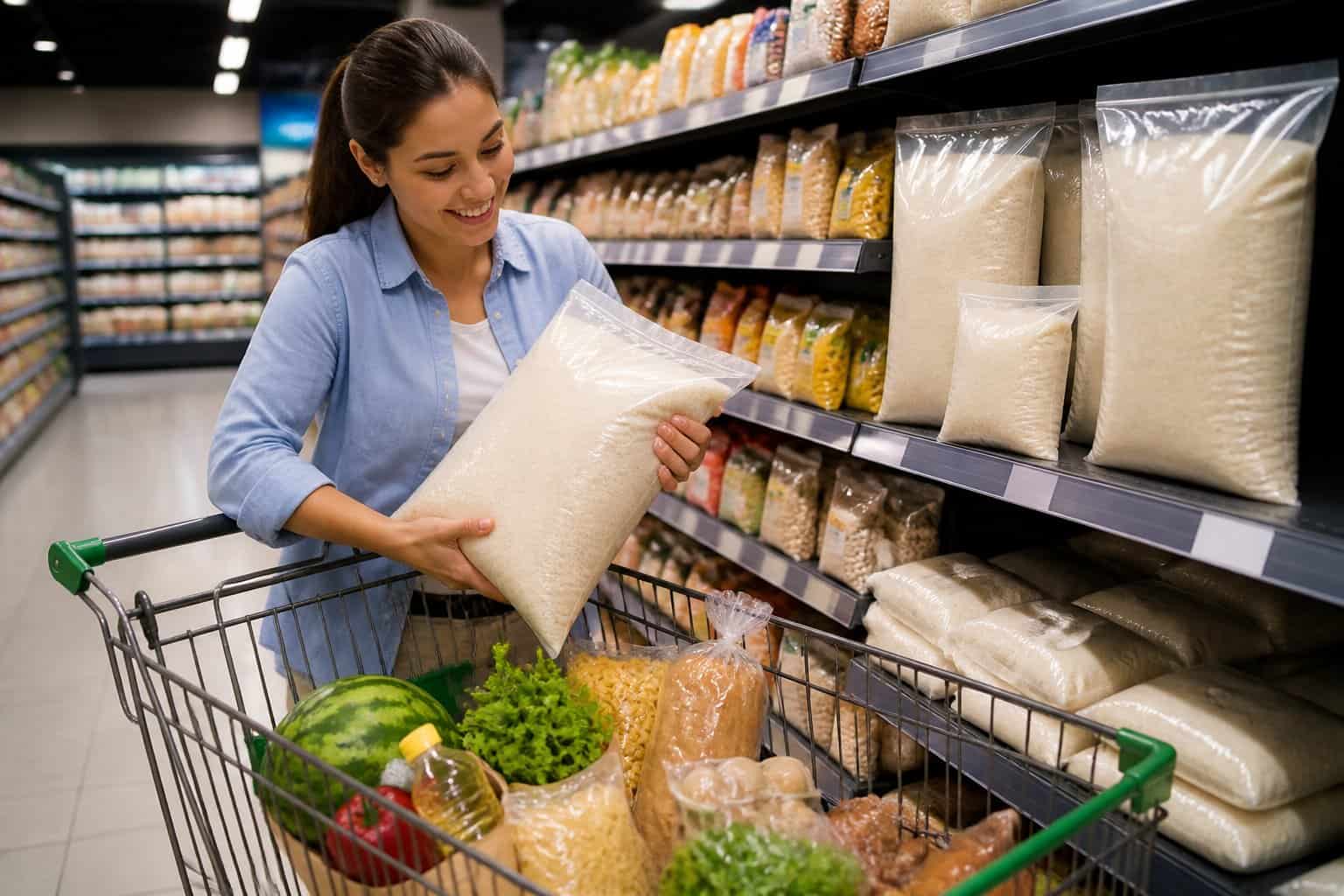
Rice stays fresh for a long time when stored properly, so buying a large bag makes sense for most households. A 10 or 20-pound bag typically costs less per pound than smaller packages.
You can find bulk rice options at warehouse clubs like Costco and Sam’s Club, as well as through retailers such as Walmart, Target, and Amazon. Asian grocery stores often carry large bags of jasmine, basmati, and other specialty varieties at competitive prices.
Once you get your rice home, transfer it to an airtight container. This keeps out moisture and pests, and helps preserve the grain’s texture and flavor over time.
If you cook rice regularly, buying in bulk means fewer trips to the store and less packaging waste. It’s a practical way to stock your pantry without overspending on a staple you’ll use again and again.
How To Evaluate Real Value Beyond the Shelf Price
A low price tag doesn’t always mean you’re getting the best deal. To know whether a purchase is worth it, you need to look at unit cost, product quality, and how well the item actually fits your household’s routine.
Unit Pricing, Store Brands, and Sale Cycles
Check the unit price on the shelf tag before comparing package sizes. This number, usually listed as cost per ounce or pound, tells you the real price regardless of packaging.
Store brands often match name brands on ingredients and quality. You can typically save 20-30% by switching, especially on staples like pasta, canned goods, and dairy.
Sale cycles follow patterns you can track:
- Weekly sales rotate on set days, often Wednesday or Thursday
- Seasonal discounts hit produce and holiday items at predictable times
- Loss leaders draw you in but require checking if the rest of your cart stays reasonable
Stock up during deep discounts on non-perishables, but avoid buying more perishable items than you’ll use before spoilage.
Balancing Convenience With Household Needs
Pre-cut produce and ready-made meals cost more per unit, but they save time. You need to weigh that time savings against your budget goals.
A family with two working parents may find the extra cost justified. A retired household with more flexible schedules might not.
Bulk purchases only offer value if you’ll use the product before it expires or loses quality. Buying a 5-pound bag of onions makes sense if you cook frequently; it doesn’t if half will rot before you use it.
Your household size, cooking habits, and storage space all factor into whether a “deal” actually saves you money.
Smart Shopping Habits That Help Stretch the Grocery Budget
Building a few consistent habits into your routine can lower your grocery bill without requiring extra time or effort each week. Two of the most effective habits involve using what you already own and storing food correctly once you bring it home.
Planning Meals Around What Is Already on Hand
Before you write a grocery list, check your fridge, freezer, and pantry first. You likely already have ingredients that can form the base of several meals.
Building meals around what you have prevents duplicate purchases and reduces food waste. It also lowers your total bill, since you buy fewer items to fill in the gaps.
Try this approach:
- Check expiration dates first and plan meals that use those items soonest
- Group similar ingredients together, such as proteins, vegetables, and grains, to see what combinations are possible
- Make a “use it up” list on your fridge or phone to track items that need to be cooked soon
- Add only what’s missing to your shopping list, rather than starting from scratch
This method works well for families who tend to buy ingredients that later go unused.
Storing Staples and Perishables To Reduce Waste
How you store food after shopping directly affects how long it lasts and how much money you save. Improper storage is one of the main reasons families end up throwing out food they paid for.
Labeling containers with purchase dates helps you track freshness and use older items first. Keeping your freezer organized also makes it easier to see what you already have before buying more.